


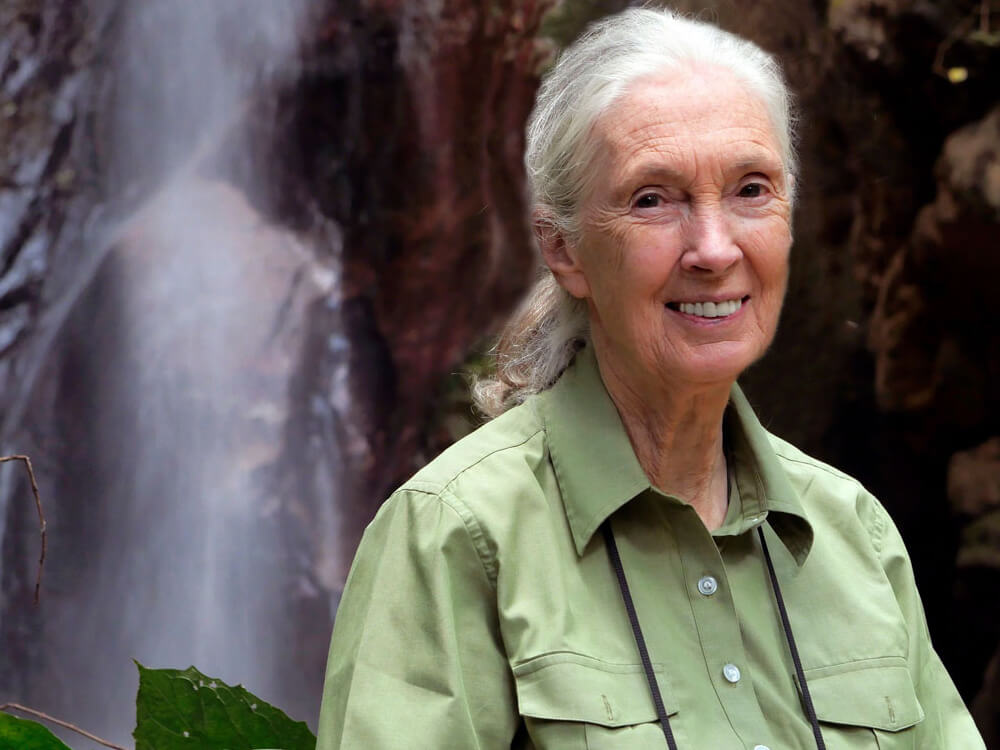








On October 1st, 2025, Jane Goodall passed away in her sleep while on a speaking tour in the United States. A champion for action, Goodall was famous for her many achievements, such as her research on primate behavior and being a United Nations Messenger of Peace. Ultimately, Goodall was an advocate for the rights of humans, animals, and the environment, which she displayed through her research, writing, speaking, and initiatives. She was the founder of various programs centered around research, conservation, and the environment, including the Jane Goodall Institute, Roots & Shoots, and the Jane Goodall Legacy Foundation.
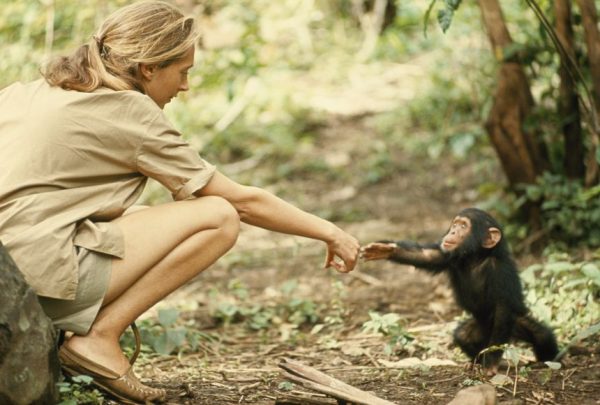
Goodall’s relationship with chimpanzees started in 1960, when she traveled to Tanzania at the age of 26 to study chimpanzee families in the Gombe forest. Goodall’s research was rooted in her longstanding love for animals, as she wanted to understand them rather than just observe, which led to her involvement in chimpanzee habitats. As a result, Goodall discovered how chimpanzees manufacture tools, eat meat, and show empathy, much like humans do. Her research shed new insight into the chimpanzee society that was not observed before, which helped bridge the relationship between humans and animals. Chimpanzee behavior became more connected to how people understand human behavior, as chimpanzees have also been called “humankind’s closest living relatives,” as her organization Roots & Shoots puts it.
In this current age of heightened concern about climate change and climate anxiety, there is a lot more that everyone can do, such as being more conscious of actions around shopping, food, and pollution. A large part of my own anxiety is due to climate change, especially when I think of humanity’s broken relationship with the environment and the world that future generations will inherit. With Goodall’s passing, it felt harder to decide whether any action is enough, and what those actions are to incorporate long-term sustainability efforts in everyday life. Even in the news, it is hard to maintain focus on what is going right in the face of so much destruction, and so one of the hardest things to keep up momentum for is the act of hope.
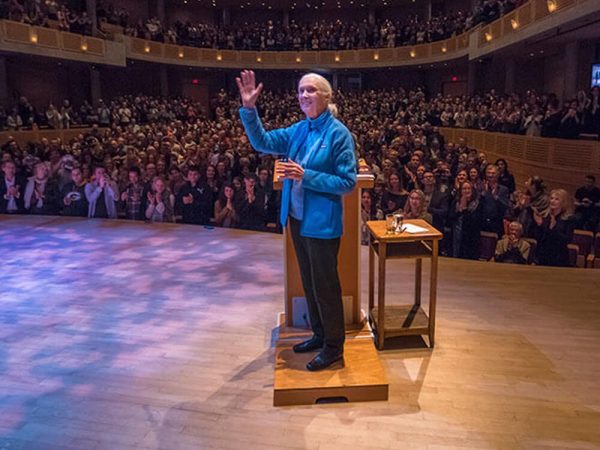
Hope is such a small word in the face of how much anxiety there is for the future. Hoping is a wistful act, and even this form of trust that things will get better because they have to, right? However, it is not so simple, considering that Goodall helped emphasize that for the planet, as for any injustice, people cannot stand by and dream without the actions that form hopes into reality. People must act in hopes of a better, sustainable future by fighting for it.
In 2015, Goodall and Dr. Sylvia Earle revealed their project, The Tapestry of Hope, to the world. This interactive map helped zoom in on different projects from members of Roots & Shoots and Dr. Earle’s Mission Blue “Hope Spots,” which Mission Blue describes as “marine protected areas.” Goodall has discussed how it is overwhelming to think about the enormity of the Earth, and so motivation is best started by first focusing on what’s around you. If everyone took actions centered around compassion in their communities, smaller efforts can snowball into leaving a more profound effect and inspire others to do the same. The Tapestry of Hope is a great way to feel less alone, as seeing the entire globe provides a reminder that there are protected ecosystems and people all over the world who are making efforts to give back to the environment. Such actions on the map include a beach cleanup in France, learning about native biodiversity in Victoria, British Columbia, and making reusable menstrual products in Uganda.
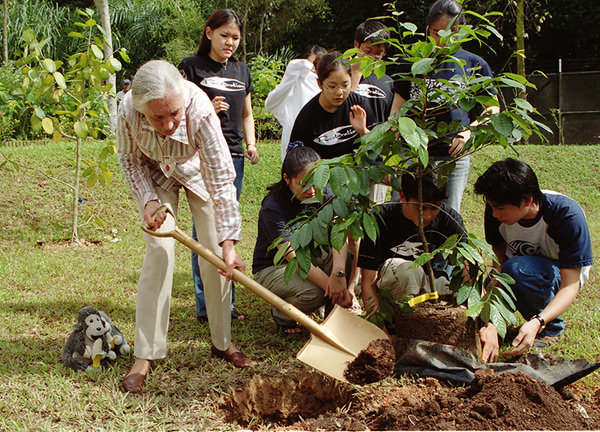
It is important to remember that we are not alone in our concerns, actions, and empathy. Goodall was a leader for female scientists and young voices, and there are many more environmental activists following behind her. Just by looking at her Roots & Shoots program, a program in more than 75 countries, opportunities are being offered to countless community members who participate in the program. Directed towards younger people, this is one of the many ways Goodall has instilled compassion for the environment, as the initiative encourages projects focused on sustainability and equality. Currently, some of those projects include native tree planting, practicing mindful consumption, ocean conservation, and hundreds more. Goodall herself was also avid about fighting against issues of poverty, discrimination, overconsumption, and the decrease in biodiversity. To Goodall, so much hope is found in what younger people can and are doing because “they’re passionate. They’re not going to give up.”
Following on this theme of hope, Goodall also started her own podcast, called The Hopecast, in 2020. Through this podcast, Goodall talked with guest speakers, like Margaret Atwood and Robin Wall Kimmerer, about building a better future along with hope. In 2021, Goodall partnered with author Doug Abrams and Gail Hudson to write The Book of Hope: A Survival Guide for Trying Times, which discusses the experiences and reasons that have given Goodall hope throughout her life. Within the second chapter, its subchapters are centered around how Goodall sees hope for the future in young people, new climate-forward innovations, and the strength she finds in nature and humanity.
Goodall has influenced the lives of millions of people, and her passing does not mean that her activism is finished. Goodall continued traveling and speaking until her death, which is a reminder that a fight is still ongoing for our planet, so it is best to begin taking action now if you haven’t already. Even as people mourn, Goodall’s hope, passion, and voice remain rooted in bringing humanity and nature closer together, and each individual can feel just as empowered to continue to volunteer, learn, and take sustainable action for our common home.