


















The story of Narcissus is a well-known classic from Greek mythology about a handsome hunter. As the myth goes, he was so beautiful that many men and women fell in love with him, but he rejected them all. One of his admirers was Echo, a nymph, who was hurt by his rejection and ultimately wilted away from her despair. The goddess of revenge, Nemesis, was outraged on behalf of Echo. So, she led Narcissus to a pond where he gazed upon his own reflection and fell in love. Unaware that the object of his affections is only a reflection of himself, Narcissus wastes away from unrequited love until he dies by the pond that he once gazed into.
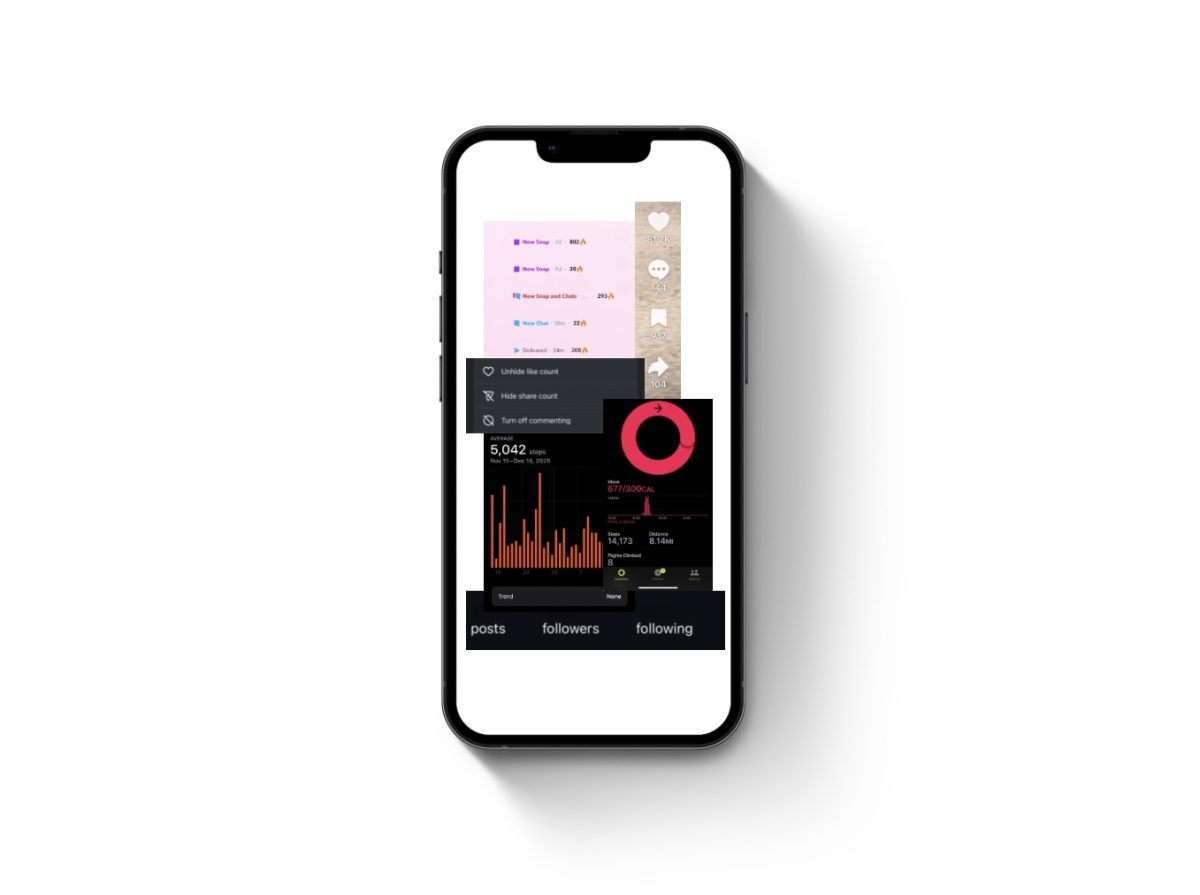
Now, 2,000 years after the story of Narcissus was made famous in Ovid’s Metamorphoses, everyone has their very own pond in their pockets. Self-perception is no longer a passing glimpse into a hidden pond. The average smartphone is a constant stream of data and statistics summing up a person’s life. Fitness and Health apps total the exact number of steps taken in a day. Screen Time breaks down not only how many hours a user spends on their phone, but also where each minute of that time is spent. Snapchat tracks the number of consecutive days of contact with friends. Instagram and TikTok use algorithms to curate ultra-specific content tailored to each user’s liking.
Personal statistics are constantly fed to everyone through their phones, while social media gives these statistics meaning. Would anyone care about their screen time, step count, likes, or followers if they weren’t being told by others what to strive for? Ten thousand steps a day, only two hours of screen time, and millions of followers are the aspirational numbers constantly touted online. While the benefit of walking and staying off screens is backed by science, the exact numbers would not mean anything if people’s every action was not tracked by their phones. Rather than life being about what feels good versus bad to an individual person, it has been boiled down to simple numbers.
The difference between walking 9,000 steps in a single day compared to 10,000 is not that consequential, but it is made to seem like a shortcoming with the constant measurement of our actions. Social media takes this a step further, giving once intangible ideas, such as affection and support, a tangible measure. Followers, likes, and comments are words that once held no meaning and would’ve greatly confused Narcissus. Now, they casually fill everyday conversations among young and old alike.
According to the Department of Child and Adolescent Psychiatry, “self-esteem refers to feelings of love, respect, and trust that a person feels toward oneself as a result of knowing oneself and evaluating oneself realistically, accepting their abilities and strengths as they are and embracing oneself.” A study of teenagers and social media use published in the National Library of Medicine found that self-esteem levels in adolescents was negatively correlated with social media use. Self-acceptance becomes difficult when the obstacle of measuring up to numbers and statistics gets in the way, especially when these measurements of their actions and attributes constantly surround each individual.
In a study of the benefits of self-esteem, published in the National Library of Medicine, people with higher self-esteem tend to have better social relationships. Just as Narcissus’s reflection in the pond kept him from the affections of those around him, the constant reflection of ourselves in our phones could be preventing us from forming strong social relationships. Knowing the parallels between Narcissus’s reality and ours, how can we avoid meeting the same fate he did?