













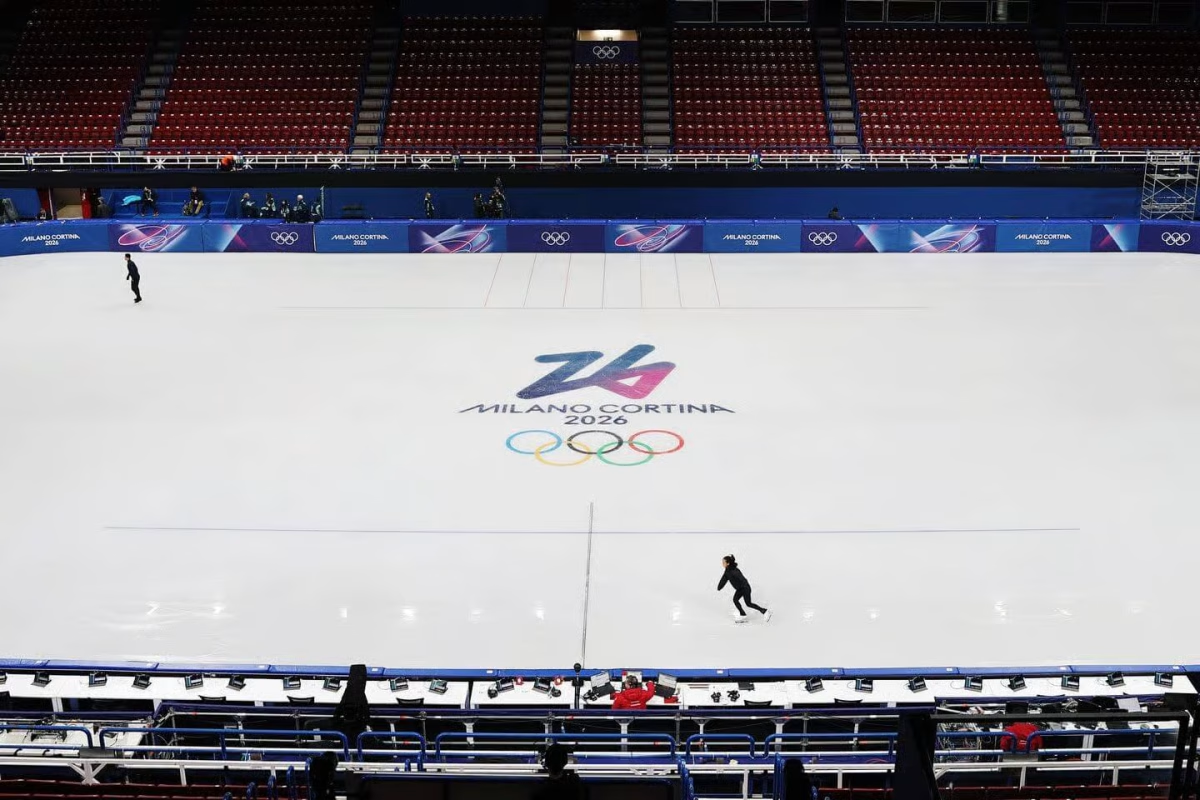


Shocking. Uncharacteristic. Disappointing. These are a few of the words that accompanied the many articles, videos, and comments surrounding Ilia Malinin and his free skate during the 2026 Winter Olympics. Malinin, the 21 year old figure skater who represented the U.S. in the Olympics for the first time this year, was subject to a great deal of attention and anticipation surrounding his performance and skill, and what results that would generate. Ads showcased his infamous (and singular) ability to complete a quad axel, and the recently legal backflip was just another showstopping move of Malinin’s. The lead up to Malinin’s performances, the short program and the free skate, were full of anticipation, and only increased after he finished in the number one spot for his short program performance. The American public was confidently expecting gold from the Quad God. And so was he.
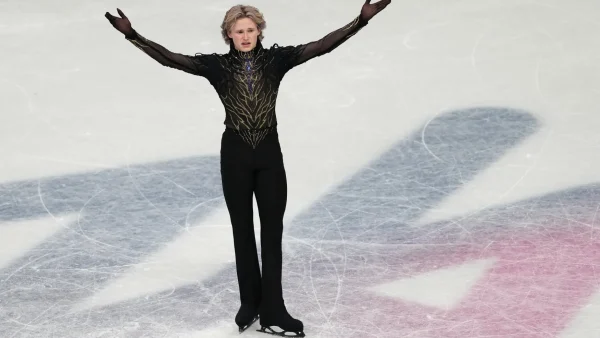
When he eventually took the ice for his free skate, 8th place result was not what he or anyone had expected. Malinin explained how “all the traumatic moments of [his] life really just started flooding [his] head, and there were just so many negative thoughts that flooded in there.” Malinin had won seven champion titles, rarely faltered in competitions for the past few years, and presented himself with confidence. However, there is something about the overwhelming environment of being on the Olympic stage that can cause an athlete to falter and feel an increase of negativity. “These are not athletes who lack talent or preparation. They are spectacular — the best in the world — and the Olympics remains the one stage they haven’t mastered,” writes social psychologist Amy Cuddy for The Athletic. Malinin had also mentioned that the way athletes are talked about and framed elevates them in the public eye to a point where they do not seem human. But they are.
Coming to the Olympics means competing in front of the whole world, and having to block out the heightened pressure that comes from being called an Olympic athlete. Having to live up to that title and talent in one’s performance is more than enough to generate intense nerves and anxiety, as pressure manifests both internally and externally. It can be heartbreaking to watch an athlete make a mistake, but that heartbreak hits harder when expectations and favor are built up to depict a performer as invincible. No one is truly invincible; not all the time, at least, yet many athletes have to deal with the way commentators and the media frame them. In Malinin’s case, “fans are placing the ultimate blame on NBC for depicting [him] as a nearly unbeatable foe,” writes Newsweek.
There seems to be a pattern of intensely favoring one person during competitions, especially in the media. Of course, nothing is wrong in believing in someone, but when, as Simone Biles said, “you’re expected to skate a performance of your lifetime and you don’t deliver,” the weight of having to be perfect in front of watching eyes can end up with a negative result. The incredible alpine skier Mikaela Shiffrin, a 2026 Winter Olympian, won a gold medal in the slalom race after eight years of no medals and years of poor performances. Even though Shiffrin already had two gold medals and has displayed her athletic talent in more than enough events, the anticipation for her next medal increased with each year that she did not get one. After all, winning Olympic gold is a goal athletes dream of, and after someone wins one medal, more is always expected.
Mental pressure is hard to escape in sports. Sports anxiety around how an athlete will perform heightens stress, doubt, and causes athletes to become distracted, and the evaluative pressure of being judged for every aspect of a presentation creates an environment of “meeting expectations” or “public humiliation,” writes Cuddy. With an audience, especially the audience that the Olympics brings, athletes become exposed to a completely different environment.
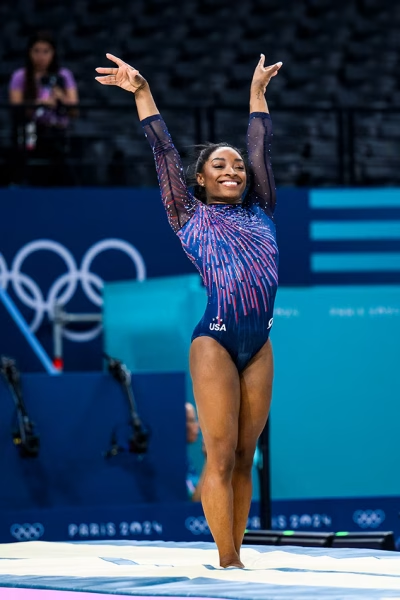
Biles is a prime example of someone who ”know[s] firsthand how difficult it is to perform when the world expects gold,” writes the New York Times. Biles experiences panic attacks and anxiety, and she decided to step away from gymnastics after the 2020 Tokyo Olympics to take some time to focus on herself, her mental health, and then gymnastics. She is now an advocate for mental health, emphasizing that “we have to protect our body and our mind … It just sucks when you’re fighting with your own head.” To Biles, one way in advocating for others is by offering support; Biles was there to watch Malinin’s performance, and gave him some important advice afterward: “setbacks under intense scrutiny are human — and survivable.”
Biles is not the only Olympian who is spreading more awareness about athletes’ mental health. Olympic swimmer Michael Phelps has been very open about his own anxiety and depression, saying “[he] looked at [himself] as an athlete and not a human being” during his swimming career. Through campaigns, talks, and his organization, the Michael Phelps Foundation, Phelps aims to support athletes and all aspects of their well-being. Another 2026 Olympic U.S. figure skater , Amber Glenn, is also a mental health advocate, and she has discussed the effects figure skating has had on her mental health; the competitive environment of figure skating brings constant comparisons and judgement around every aspect of how a skater presents themselves on the ice. Glenn had to take a break from the sport due to her struggles in the competitive environment before she eventually returned. Glenn feels more confident as a skater now, though she still experiences “fight-or-flight mode” after a mistake. All three of these Olympians are reminders that decisions and discussion around caring for mental wellness and supportive environments is needed to make a difference.
Driving oneself to an unhealthy point in the pursuit of perfection does not seem worth any medal. When the pressure wins, the joy and happiness found in participating in a sport and performing for others slips away and is replaced by self-consciousness since the body wants to protect itself from harm. Some athletes keep going and some have to step away; some will return to their sport, but, throughout the journey, the pressure is enough to completely change an athlete in the ways they think, feel, and react in each moment. Though the scrutiny from being in the Olympics causes many athletes to spiral, even when they do not expect it, taking the time to regain control over a performance or just how much an athlete loves their sport is important is understanding that this is a journey and an opportunity; one performance should not, and cannot, be the defining moment of one’s career.
Some athletes who do take a step back, like Glenn and Biles, are able to return as more confident performers as they work on how to manage mental stress. Alyssa Liu, who won gold in the women’s figure skating free skate event this year, had also taken a step back from skating, and retired for two years to experience her life outside of skating; eventually, she rediscovered her joy in the sport and came back with one of the best mindsets: “reject[ing pressure…] and convert[ing] it into appreciation.”
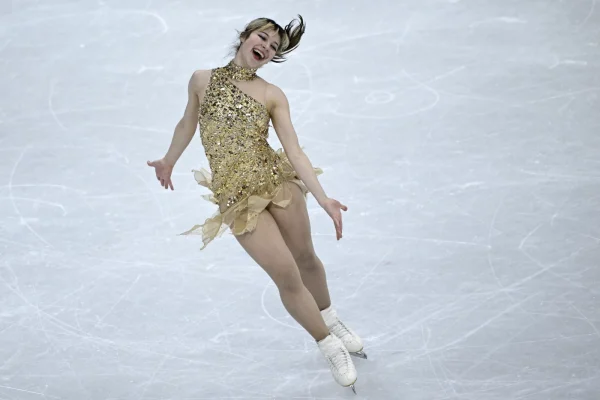
This mentality is something that has developed from previous Olympic experience, taking a break, and rediscovering her joy for figure skating. For Liu, she feels happy just by performing in front of an audience and on her own terms, which is what makes her comeback so special. These personal decisions about music, outfits, and routines help increase her love for the sport. Though her comeback came with more outside pressure surrounding how she would do after taking such a long break, Liu has approached the Olympics as another opportunity for her to show her skills and learn and grow from each moment. The result? A thriving, confident skater who is happy to be here. Liu ended up winning gold, even though she was satisfied just from being able to skate.
Figure skating has been described as a beautiful but ruthless sport, especially in a world that mostly prizes winning over joy. When athletes do mess up, the public and the media rush to focus on the mistakes and center the athletes’ worth around a gold medal. But why does it have to be so toxic, and why have we built an environment where competition and scrutiny are what generate more interest for the people watching? When someone is compared to a god, of course moments of “weakness” are immediately latched onto by the public when that person shows any signs of human error. But as Liu demonstrates, balance between competition and enjoyment contributes to the best result: happiness.
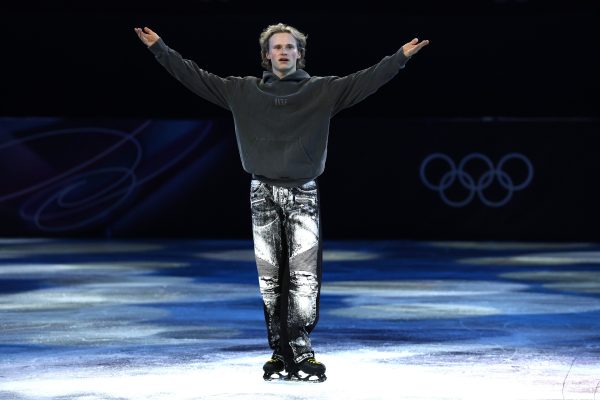
For Malinin, there was one more moment to make a statement on the ice before leaving the 2026 Winter Olympics. The exhibition gala at the end of the Olympics is a chance for figure skaters to show off in a more carefree, creative, and enjoyable environment without the pressure of being evaluated for their performance. Malinin chose to perform a routine that displayed the pressure, emotion, and battles he faced at the Olympics, and the audience was captivated.
The moment Malinin got off the ice after his exhibition gala performance, NBC reporter Andrea Joyce asked him: “Why was it important for you to return?”
“It just was really important, especially for what happened,” said Malinin. “The reason I wanted to go back out there is, you know, give it a redemption skate. Just prove them all wrong.”