




















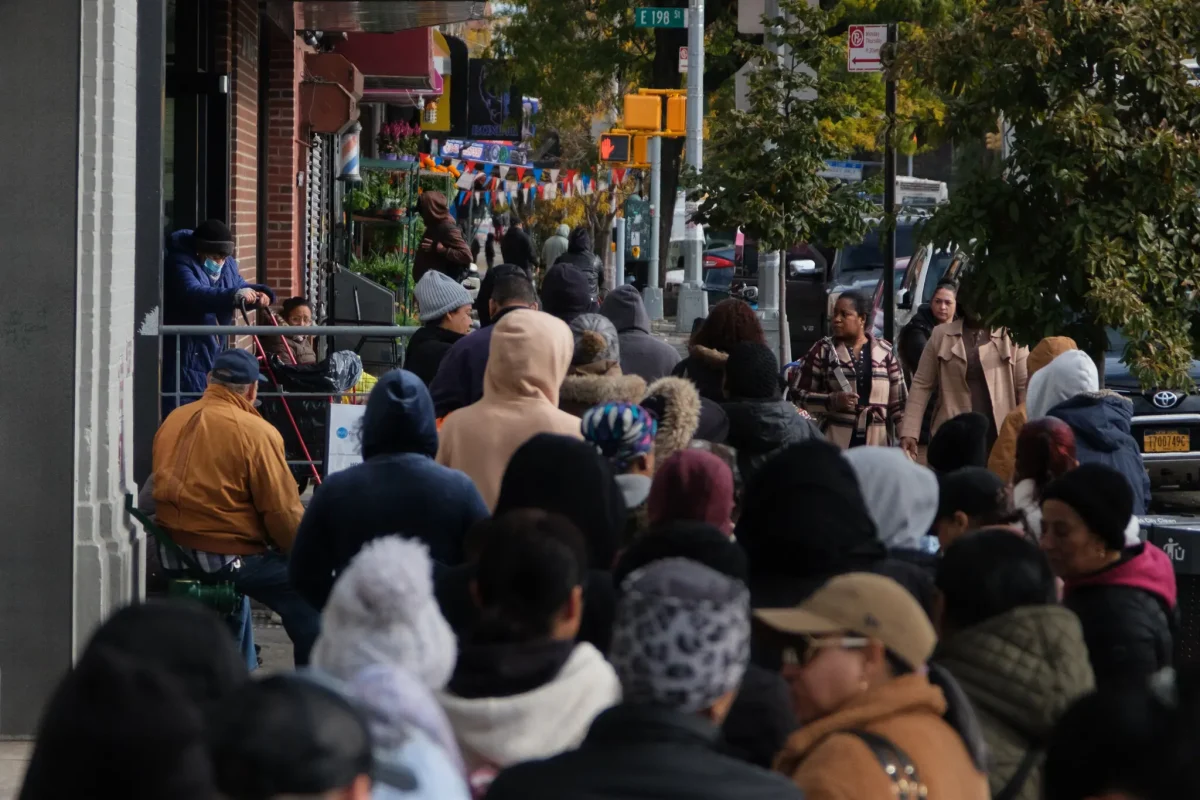
Update: As of Monday, November 10, 2025, a continuing resolution passed the Senate. In order for the shutdown to end, the House will have to return to Washington to vote before the bill goes to President Trump.
It has been over a month, and the U.S. government remains shut down. How? Congress has failed to pass a bill to fund the government before the end of this fiscal year, which was September 30, 2025. This blocks federal agencies from spending any money, leading to thousands of departments having to furlough their workers; other workers, such as active-duty personnel, are deemed “essential” or “excepted” and must work without receiving a paycheck.
The effects are starting to take hold on the economy: As of November 1st, 2025, the removal of Supplemental Nutrition Assistance Program (SNAP) benefits is affecting over 44 million Americans who depend on this resource for food security. The U.S. economy is expected to take a $7 billion hit in the first month alone, resulting in a slowdown to the U.S. GDP (Gross Domestic Product), according to CNN. Due to the government shutdown, unemployment and job data are not being collected, making it difficult to understand the ongoing economic impact of the shutdown. With all these growing financial and social consequences, people are left wondering why the government is shut down again and why this issue recurs.
Why is the government shut down? Why has this happened before, and why is it happening again?
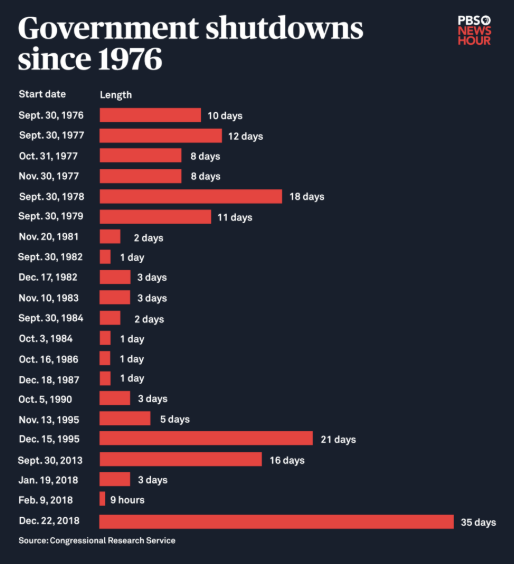
Government shutdowns have been common throughout the past 50 years of history. Typically, shutdowns occur when neither party can agree on a specific part of a bill. Currently, the Republicans have full control of the House, but not the Senate, and when passing a bill through the Senate, three-fifths of the votes are required. If the 60 votes are not achieved, the Senate enters into a filibuster. This is a tactic in the Senate used to delay or block a bill by extending the debate. This can occur due to the unlimited debate policy in place.
With the Democrats in the minority, they are using this power to hold up the Republican short-term funding bill in order to negotiate the extension of the subsidies (money meant to offset what someone is supposed to pay) under the Affordable Care Act (ACA), also known as Obamacare. Without the subsidies, a person will, on average, pay 114% more on health insurance than they were spending before.
Furthermore, the Democrats are trying to reverse the deep spending cuts for Medicaid, a program that provides healthcare for low-income families. A compromise between Republicans and Democrats must be reached for the shutdown to end. As of Tuesday, November 4th, for the 14th time, the Democrats voted against the short-term funding bill proposed by the Republicans. Recently, on Friday, November 8th, Senate Minority Leader Chuck Schumer proposed a deal (made by Democrat Senator Gary Peters) on behalf of the Democrats to open up the government if Republicans agree to a 1-year temporary extension of the expiring ACA subsidies, and after both parties can come together after the shutdown to create real reform for the next calendar year.
The majority (Republican) leader, John Thune, called the offer a “nonstarter” and expects the Senate to stay in Washington over the weekend to negotiate, implying that the Senate stands in a deadlock.
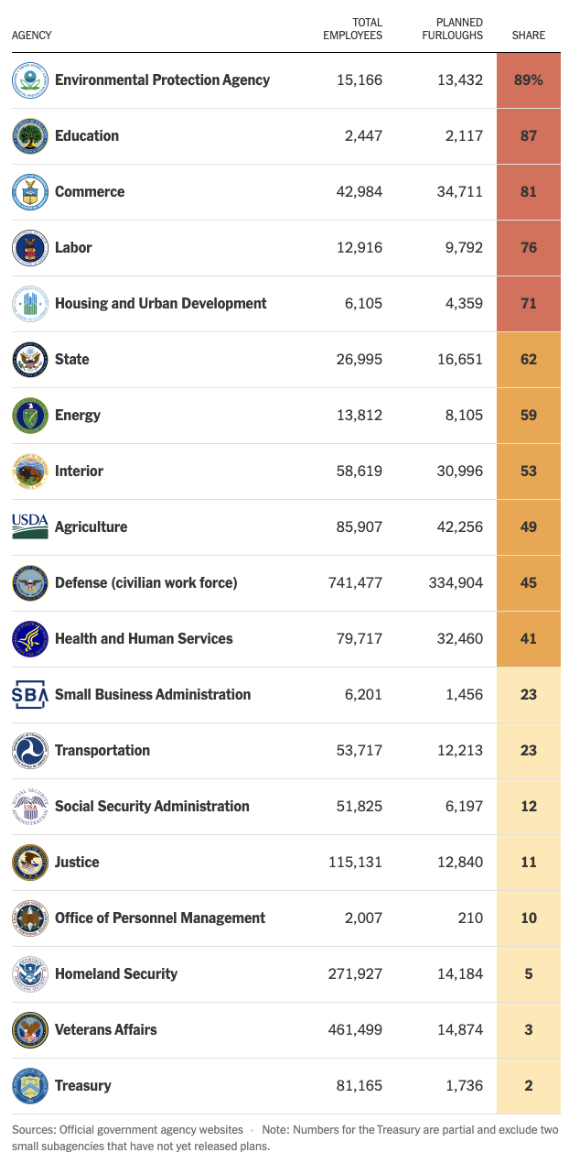
Who is affected?
Thousands of federal workers have seen their paychecks disappear these past few weeks, and certain departments are increasingly not showing up to work, including the FAA and TSA departments (which control airport security). Airport security workers are calling out sick to take on second jobs to maintain financial stability. These employees are at risk every day trying to keep up with their expenses.
Additionally, thousands of Americans rely on air travel for business or family matters, resulting in extensive lines and airport delays. Last Wednesday, November 5th, the FAA issued an emergency 10% cancellation on flights at the 40 busiest airports in the country, including the 3 major airports in the DMV. In an interview with CBS News, US Transportation Secretary Sean Duffy expressed that reducing the “flight capacity will take pressure out of the system” and stated the cuts could be reversed if the Democrats vote to pass the bill, “as there’s plenty of time to negotiate” in a press briefing with Forbes.
Workers in other departments are expected to work without receiving a paycheck, which leaves them under financial strain both personally and for their families. As Stone Ridge is located in the DC metropolitan area, the community includes many federal employees and their families who are affected by this shutdown.
The Effect on the Stone Ridge Community
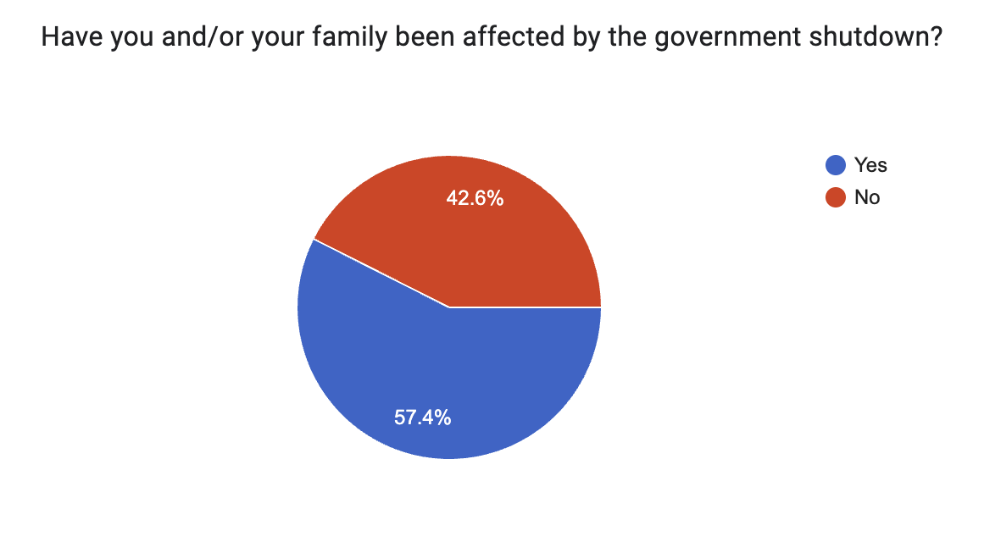
Data from a recent poll sent out to the Stone Ridge Upper School shows that over half of the community is affected by the ongoing government shutdown. A common reply among the answers was the awareness of budgeting and spending money in the anticipation of a prolonged shutdown.
One student expressed how “their [parents’] bosses told them to budget until Christmas,” indicating the uncertainty of when they will get their next paycheck.
One Stone Ridge community member expressed financial concern about the absent paychecks, as “if this continues, [she] will have to pause the mortgage payment on [her] house.” She also expressed that the medical care treatment her husband receives may be cut, which would leave her husband in a life-threatening situation, as it is incredibly unsafe.
We also followed up with community members who responded to the form. One student addressed how she wants people to understand that “the federal workers who are still working, […] feel an obligation to keep working so that the country doesn’t fall apart.” 67% of U.S. workers live paycheck to paycheck, but with the Senate focusing on their party’s interests, Americans are left to deal with the fallout.
Upper School English teacher, Mrs. Capehart, emphasized this point, saying how this situation is “never normal because the concept that [a] paycheck is dependent on a group of people just basically throwing up their hands and saying, we’re not going to make a decision, is unnerving.”
There is a lot of tension in the Senate, and the news has centered around whose fault it is rather than directing all focus on ending the shutdown, which another student expressed frustration with: “I wish that [both political parties] just paid more attention to [people’s] struggle[s] rather than who’s causing a struggle cause we as humans can make more of a change if we come together instead of focusing on picking a side.”
In times of need, it is crucial to be mindful and aware of events where many people are struggling. When asked if there was anything else she wanted the Stone Ridge community to understand, Upper School History teacher Dr. Ludwig reflected: “in all of life, but […] right now, specifically in our area, we don’t know what people are going home to in the DMV. […] And so I would hope we could be patient and kind to each other.”
As the country continues to feel the impact of this government shutdown, the responsibility in our community is important. After seeing how students and families are impacted, it becomes evident that these issues do not only happen in the news–we walk past them every day. Moments like these remind us to pause, support one another, and show empathy to navigate these difficult situations.





CG • Nov 24, 2025 at 2:56 pm
Julia • Nov 10, 2025 at 2:45 pm
Great article Jayden and Arabella!