

















So you want to get into thrifting and second-hand shopping, but you don’t know how. Let me help you! I consider myself a pro thrifter with many years of experience under my belt, so I’m the perfect person for the job. Thrifting is great because it helps you expand your wardrobe at a fraction of the price of retail stores, and you can find unique pieces you wouldn’t find elsewhere.
Consignment v. Thrift
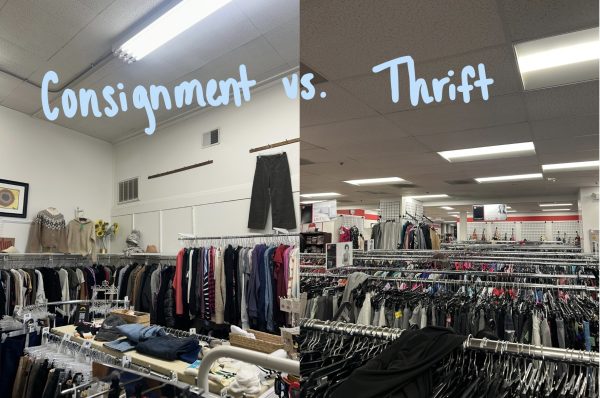
Thrifting comes in all forms, so make sure you’re choosing the experience that matches the commitment and energy you have for the process. If you have less energy and are willing to spend a bit more money, you may want to opt for a consignment or curated store. Consignment stores sell items on behalf of the original owner, giving them a percentage of the sale price. These stores tend to have a smaller selection of items, which are usually higher quality and in better condition, but are more expensive.
If you have a bit more time and energy on your hands, thrifting is the way to go. Thrift stores sell items that have been donated or sold to the store at a very low price, which means you may find items in worse condition, but for much cheaper. To put it simply, shopping at thrift stores is like hunting for treasure, whereas shopping at a consignment store is like having all the treasure in front of you and just choosing which you like best. For reference, you can see the size of the entire store of Sunflowers Consignment in Kensington, versus just a fraction of the Salvation Army.
Store Recommendations
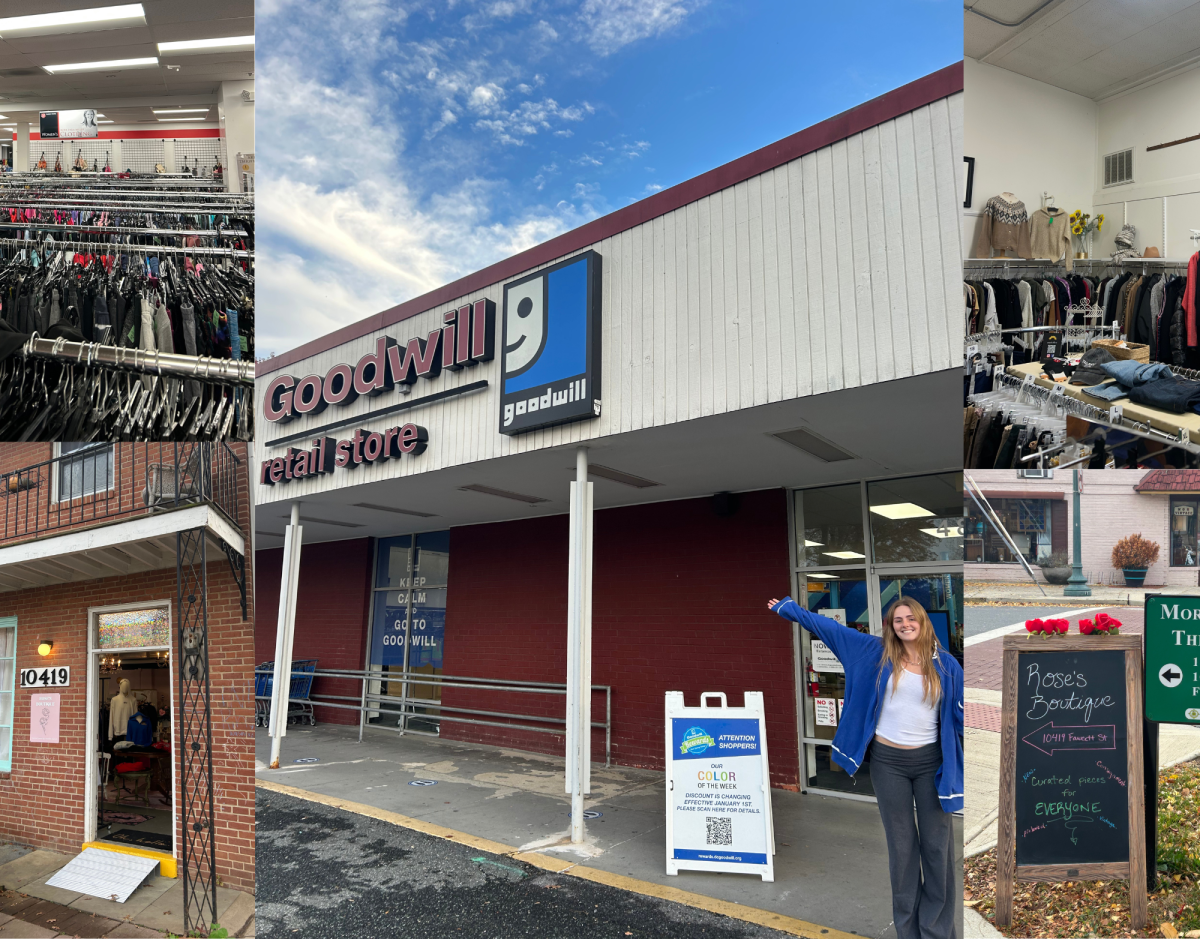
For consignment stores, some of my favorites are Sunflowers Consignment and Rose’s Boutique, both in Kensington, and Reddz Trading in Bethesda. I like these not just because they have good finds, but also because they are local. When I go to a consignment store, it’s usually for convenience. So I recommend checking out what consignment stores are nearest to you for the easiest shopping experience.
As for thrift stores, I highly recommend Unique, Goodwill, and Salvation Army. These stores usually have a wide selection of items with lots of variation. Keep in mind, though, this means you need to come prepared to flip through rack after rack of clothes if you want to find the best items.
My Thrift Trip
For research purposes (and my own selfish reasons), I grabbed a coffee and one of my friends and headed to the thrift.
My mission: find a pair of brown boots
Total time spent thrifting: 3 hours
Stores visited: 4
Items bought: 6
Money spent: $41
Mission achieved?: sadly, no
Thrift Tips
What to Wear
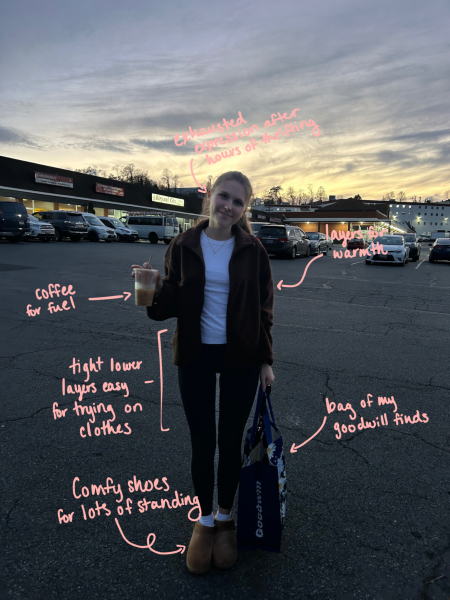
My first tip for any thrifter, new or old, is to think about what you wear when thrifting. This is up to personal preference, but I like to wear tight-fitting clothes with layers. Oftentimes, at the thrift, there isn’t a fitting room, or I’m just too lazy. Trying on clothes usually looks like throwing them on in the middle of the store on top of whatever I’m wearing. I also like to wear layers just in case it’s cold, and usually I’m holding an iced coffee, which doesn’t help warm me up.
When to Go
Next, I would recommend thinking about what day and time you’re choosing to go thrifting. For this trip, I went on a Saturday afternoon, which I would not recommend. By then, the racks had been picked through by all the Friday evening and Saturday morning shoppers, so I had to choose from what others had passed over. The earlier in the week you can go, the better. I especially enjoy going on random weekdays or at the start of the weekend. You may not realize it, but when you go can completely change the experience.
How to Find Items
Once you’ve grabbed a friend who’s fun to shop with, meaning they have the stamina and the supportive attitude needed for thrifting, you’re set to head to the thrift. Go in with an open mind and be ready to try on lots of items. The biggest mistake many make when thrifting is passing over items because they’re treating the thrift like a retail store. At a retail store, the items are ready to go straight from the rack to you; that’s not necessarily the case at the thrift. Be creative and think about how you could repurpose items that don’t fit exactly right, or have some imperfections to them. Also, don’t confine yourself to only looking at clothes categorized as your size. Sometimes items are misplaced, or the reason they’re at the thrift is that they did not fit according to the labeled size.
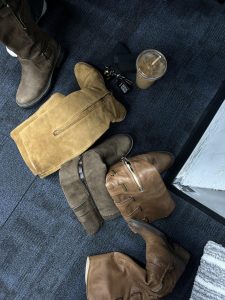
From my own experience, even though I didn’t achieve my goal of finding my perfect brown boots, I tried on countless pairs. None of them were my size, but I didn’t know that until I put them on for myself. The effort was worth not having to wonder if they would have fit me or if I passed over a perfectly good boot because it wasn’t labeled as my exact size.
Trying on Clothes
As for the actual trying on of clothes, I have a few tips I can share with you to make the process as easy as possible. For jeans, jean shorts, or bottoms of any kind, if you wrap the waist of the pants around your neck and your fingers touch comfortably, the pants will most likely fit you.
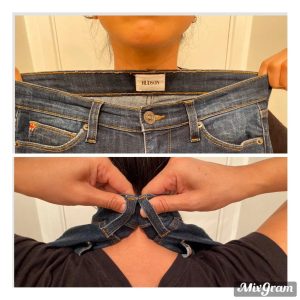
You can see how to do this in the image to the left, as it can be hard to understand.
For shoes, I recommend grabbing a few pairs and finding a spot out of the way of the racks to try on your shoes in peace. As far as other items of clothing go, this is why I like to wear tight layers. Anything from a jacket or a top to a belt can be quickly put on over leggings and a t-shirt. Honestly, though, a lot of times with t-shirts and other tops at the thrift, I’ll just take the gamble and hope it fits well.
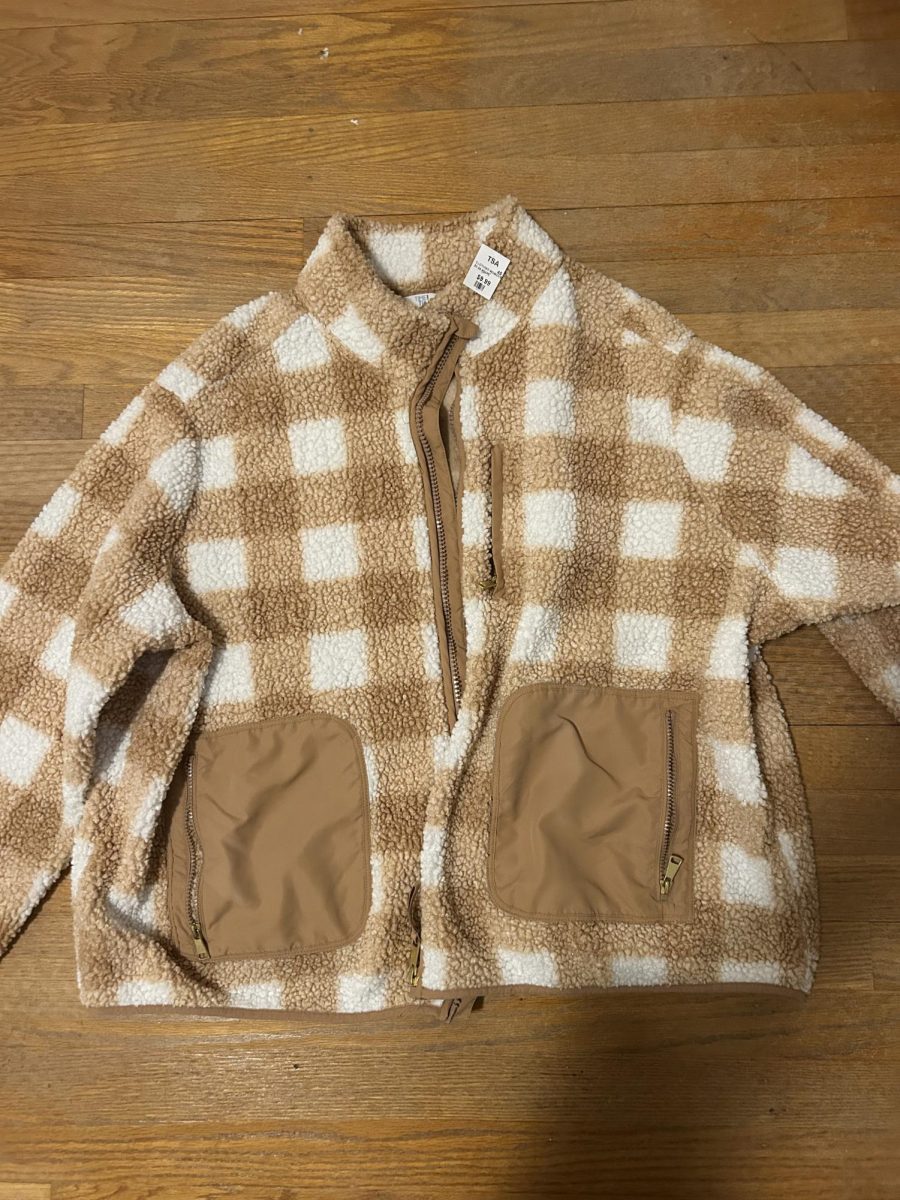
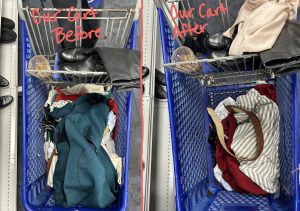
Even with a subpar selection on a Saturday night at the thrift, I came out on the other side with a few good finds. It just takes some looking, an open mind, and a lot of patience. It may not feel worth the effort of a three-hour shopping trip just for a few items of clothing. But in my opinion, the value of the six items I got (which you can see below), compared to the $41 I spent in total, was definitely worth my time. Now, it’s up to you to decide if thrifting is worth your time and energy!