














2026 marks the 61st anniversary of The Sound Of Music, one of the most beloved stories that has been in film and on stage. With a classic soundtrack composed by Rodgers and Hammerstein, the Salzburg backdrop, and memorable plot, there is no wonder the musical is iconic! Inspired by the real life experiences of the Trapp Family, The Sound Of Music premiered onstage in 1959, which inspired Hollywood to produce its own screen play. The result? The film that many know and love today, which came out in 1965.
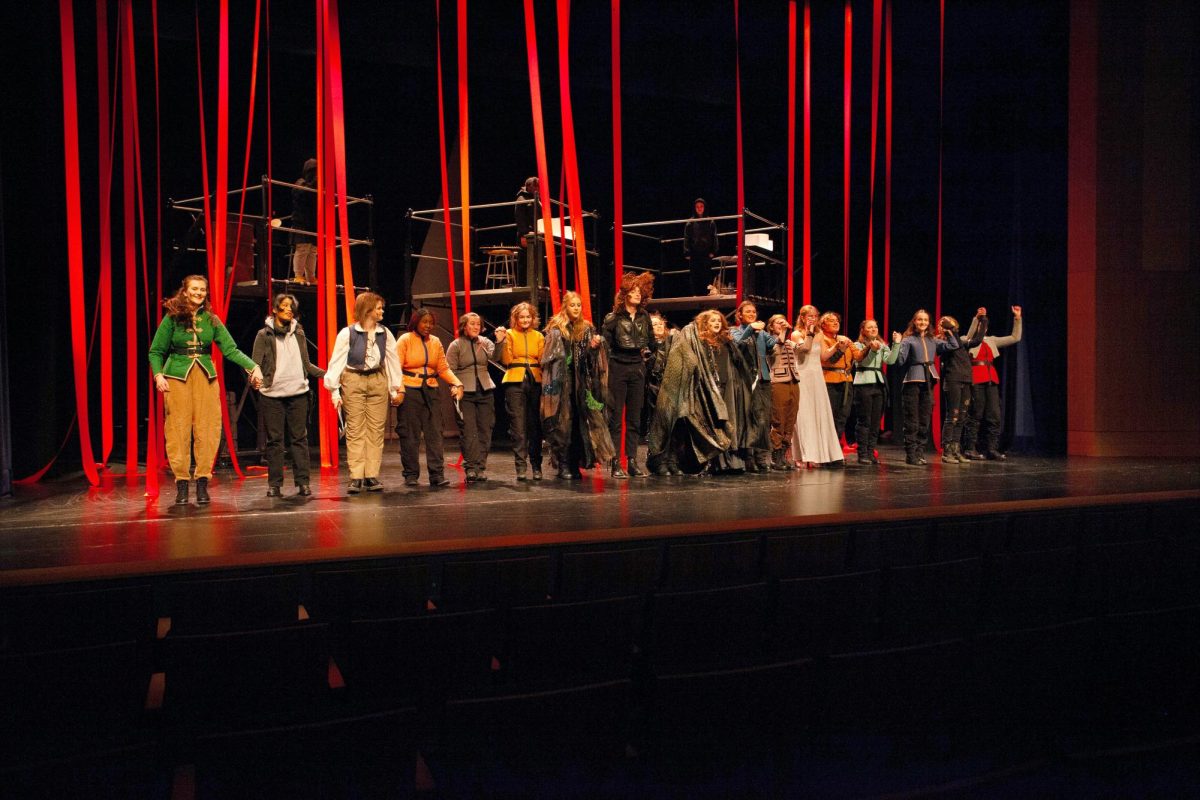
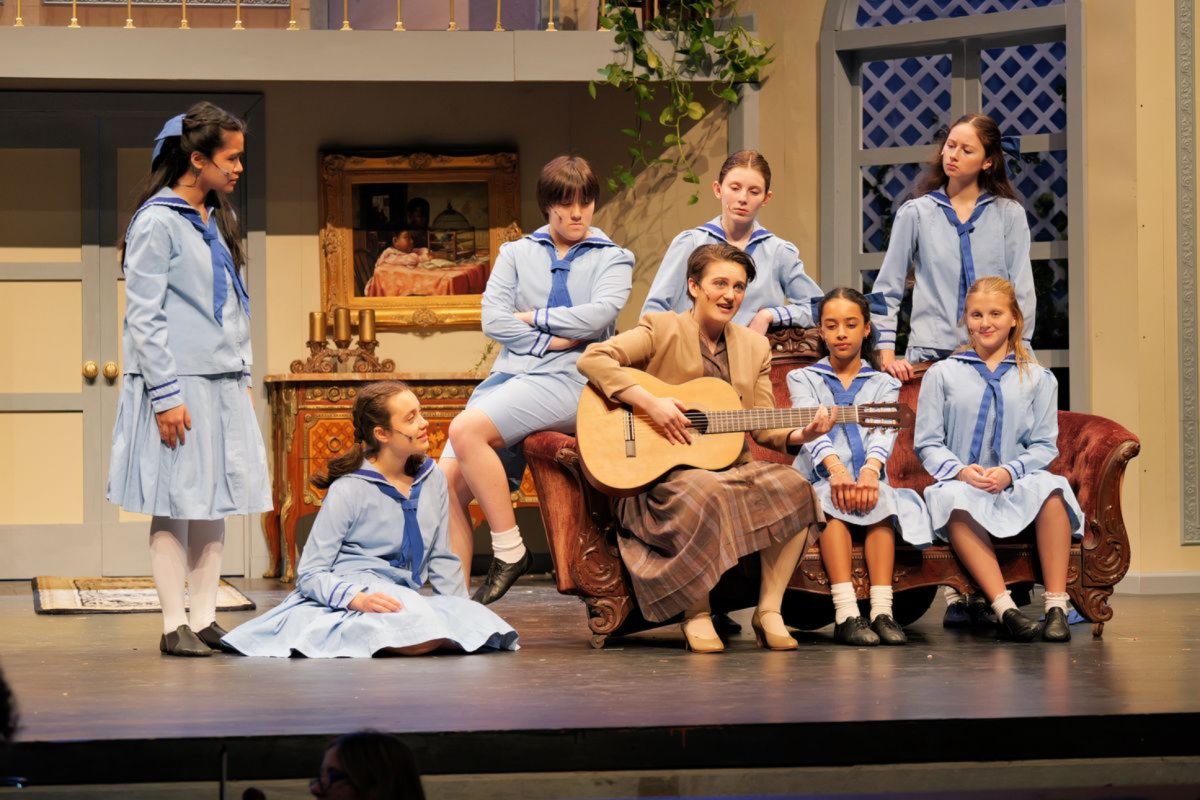
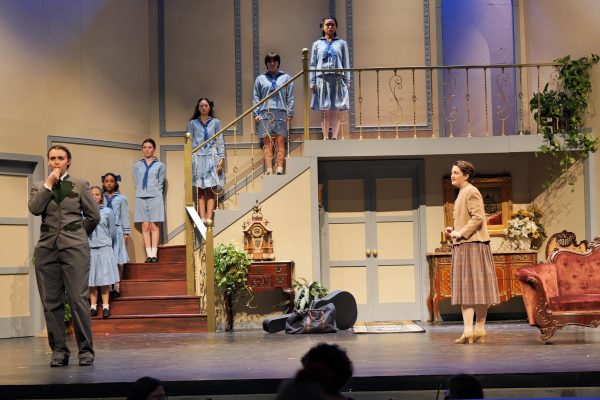
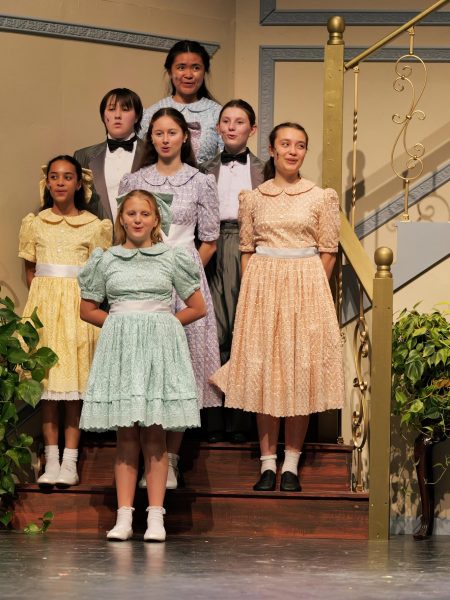
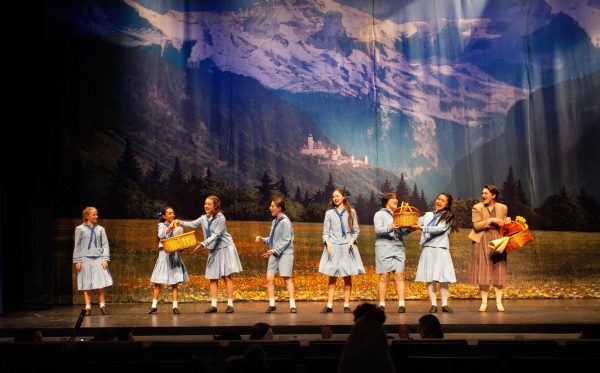
The enjoyment of watching The Sound Of Music does not escape the stage production put on by Stone Ridge, whose spring musical this year ran from April 16th, 17th, and 18th in the Cokie Roberts Theater. The cast was charming, the songs were, as always, infectious, and the set was impressive; the backdrops were a great touch, easily transitioning between the Abbey and the Austrian hills, plus the von Trapp house had a gorgeous design. All of the costumes were also lovely, with the von Trapp children having some of the best designs (my personal favorites being their curtain clothes and ball outfits).
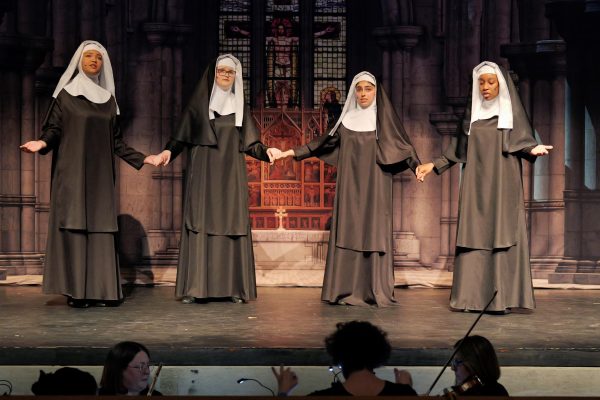
But, let’s go back to the very beginning. As the backdrop for Nonnberg Abbey fell, seeing the nuns walk into the theater carrying lit candles and singing acapella was one of the most captivating openings I’ve seen at a Stone Ridge production. The audience then becomes transported to the hills through a simple backdrop change, where Maria (Caleb Bannen) comes out to sing “The Sound of Music,” a triumphant number. Bannen’s voice is amazing, and just from his first song, he expresses the yearning, kindness, and optimism that makes up Maria.
From there, Maria embarks on a new journey away from the Abbey where she is encouraged by Mother Abbess (Sofia Salim) to take a new position as a governess. Any scene between the two of them is wonderful, especially as Salim plays her character with wisdom and maturity that radiates from her voice to the way she carries herself onstage. At the Trapp house, Maria meets Captain von Trapp (Ella Loudermilk), who is stern, and cold; Bannen and Loudermilk certainly portray stark opposites to one another (yet with Maria’s presence, the Captain becomes warmer as the musical goes on). They are not the only people in the house, though, as his seven children enter the room at the blow of their father’s whistle; enter Liesl (Janica Belen), Friedrich (Emmett Driscoll), Louisa (Coco Chiu), Kurt (Caroline Tramontozzi), Brigitta (Julia Tchikine), Marta (Madison Kunk), and Gretl (Coco Cline), all of whom carry distinct, lovable personalities. They truly brought charm to every scene they were in.
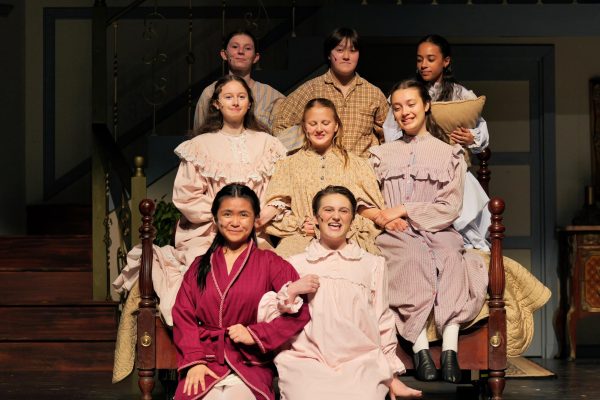
Maria steps into a new world, though she still needs permission to sing there, and the Captain would most definitely tell her no. Bannen is able to bring humor and optimism to the situation, and helps strike the contrast that Maria brings to such a stiff household. There is no singing in this house anymore after the Captain’s wife passed away, but Maria is adamant singing is where the children and her will start their lessons. Songs between Maria and the children, like “Do-Re-Mi” and “The Lonely Goatherd,” are just a delight to watch, especially since these numbers are catchy and include entertaining choreography. Plus, it just goes to show how exciting it is to bring music into an empty space.
After seeing people rediscover the joy of music, Maria feels more comfortable with the Trapp family, and grows closer to the Captain, much to the dismay of his possible new fiancee, Frau Elsa Schraeder, the baroness (Eleanor Korte). Loudermilk skillfully displays the changes to the Captain’s demeanor as a result of Maria’s presence, especially after his children sing for Elsa. This moment is tender and enchanting, as the Captain hears music again in his home for the first time in a long time. “You’ve brought music back into my life,” he says, and Loudermilk brings these softer, subtler changes to her voice and mannerisms.
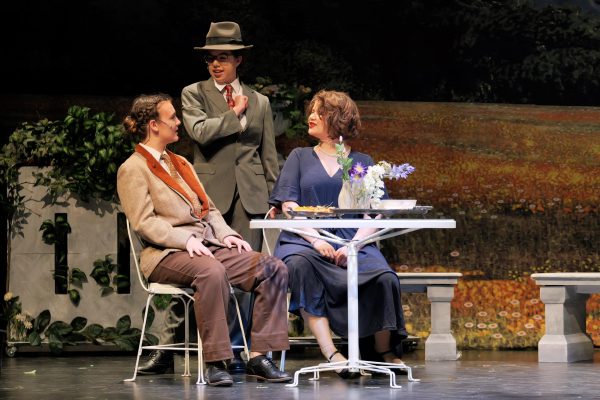
Another noteworthy aspect about The Sound Of Music is how the musical mixes uplifting scenes with ongoing political tensions; there will be scenes with Maria and the children where she is teaching them to sing that then surround scenes with the Captain, Frau Schraeder, and Herr Max Detweiler (Zoia Mitova) which carry a more serious tone. Both Korte and Mitova bring charm and selfish intentions with their characters, and it is intriguing to watch as these three handle the historical context surrounding the rising Nazi presence in Austria; at this moment in time, the Anschluss is coming, and to that Max says: “What’s going to happen is going to happen. Just make sure it doesn’t happen to you.” While Max and Elsa are more comfortable submitting to the “New Regime,” there is tension with the Captain who is adamantly loyal to his country.
However, love perseveres; Maria and the Captain do end up getting married, even after a moment of doubt from Maria where she goes back to the Abbey and is then encouraged by the wise Mother Abbess to confess her feelings. Maria’s love for the children, the Abbey, and the mountains along with the Captain’s love for his family and Austria amidst the Anschluss all demonstrate what they want to fight for. After all, it is this love for their family and country that drives them to leave Austria; Maria supports her husband’s sense of loyalty, as he is ordered to join the German Navy, and helps come up with a plan to escape—which of course includes music—by having the whole family sing in the upcoming Kaltzberg Festival. Even though they reprise “Do-Re-Mi,” it it interesting to see the stress lying beneath their performance. This all culminates in a heartbreaking, beautiful moment, when the Captain sings “Edelweiss.” There is no backdrop but the curtain, and the Trapp family is upfront and center, surrounded by nothing except each other, and hearing the trembling emotion from Loudermilk’s voice conveyed the love the Captain has for his family and his country.
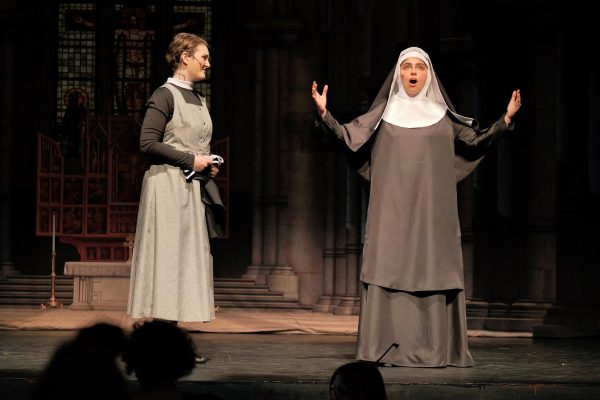
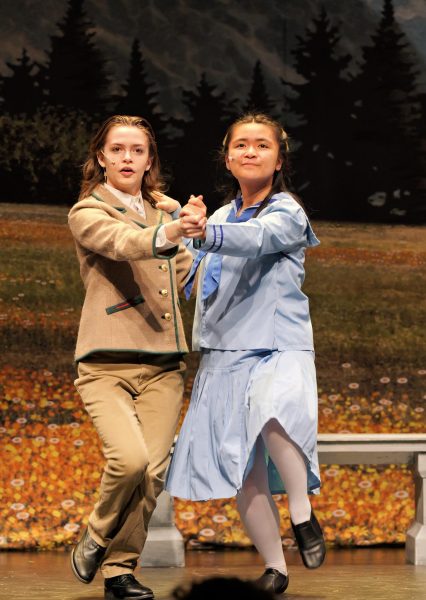
The Sound Of Music also benefits from having plenty of emotional and beloved songs, such as “All Of My Favorite Things” (“Singing it always makes me feel better,” says Maria), and “So Long, Farewell.” Through the music, the cast was able to connect with one another and let the emotion shine through. Belen and Charle Gaughan, who plays Rolf, are dynamic in “Sixteen Going On Seventeen,” creating a charming scene together with fun choreography, something that this production incorporates well into multiple numbers. But then there are songs like “Climb Ev’ry Mountain” and “Edelweiss” that are standouts because of the fervor Salim and Loudermilk bring to such beautiful pieces. These songs are gorgeous because they exhibited how a grand and dramatic number, like “Climb Ev’ry Mountain,” and a gentle yet passionate number, like “Edelweiss,” can be equally as moving. In fact, they do not require minimal props or movement; just pure voices.
There is a reason why The Sound of Music is still so relevant more than 60 years after it was produced; the themes about finding joy, love, family, and music are extremely potent, especially in moments of strife and current politics. “The thing to do today is to get along with everybody,” says Max, but it does not take much for the audience to see that Max’s words are too unsettling. Even the musical itself ends in uncertainty, but it is uplifting as well; though the Trapp family must escape through the mountains, they have each other. After all, the real Trapp family did persevere, making it through the Alps, across many countries, and ending up in America, where they made careers as a singing group.
This story emphasizes the importance of why stories matter and need to be told, especially to ensure awareness about history. Music is the one central theme tying it all together, as music is associated with creating a home, love and joy, and persevering within unstable environments and darker themes. Every time I watch The Sound of Music, I can’t help but feel almost every emotion, yet the strongest one is always joy. The songs are timeless, and so is the story; you can’t help but want to sing along and wish you were right there in the Austrian hills.